Earlier this year, at Grub Street's Muse and the Marketplace writer's conference, I recorded a short short story for The Drum (the literary magazine for your ears). It was an open mic, anyone could record a story with the understanding that if the editor (erstwhile Beyond the Margins writer Henriette Power) liked it she would use it for her online lit mag.
Alas, the story didn't make the cut. But she sent me the audio file to play with. Unfortunately, Blogger doesn't make it easy to embed an audio file into a blog post. So I've posted it over at my other online playground, Lowell Postcard. If you're interested, take a left turn and check it out.
Showing posts with label short stories. Show all posts
Showing posts with label short stories. Show all posts
Saturday, September 29, 2012

Wednesday, May 19, 2010
Was it Good for You?

So why all the sex? Like I say, I didn’t do it on purpose. The first story, Younger Things, published in J Journal last fall, takes place over one feverish night and morning in which a young man and his older lover face one of your typical dark nights of the soul, including power struggles, crazy behavior, dares, and confessions. The second story, Casey, due out in Fiction Magazine #56 this spring, concerns a teenage boy falling in love for the first time. Part of that love is depicted in a sex scene, I hope both tender and realistic.
Each publishing experience was different. With Younger Things, I worked with the editors of the journal who requested specific revisions. Some changes were at the sentence and word level. With others they pushed me to shade the characters more, and to tweak the ending into something more solidly hopeful. But they never asked me to tone down the mature content. In fact, I had the feeling that it was because of the more adult material that the story had been considered in the first place.
Casey was accepted three years after I sent it out to Fiction. I hadn’t sent it to any other publication because I wasn’t sure about it. It was an outtake from my finished novel "A Little Disappeared." When the acceptance email finally came through, I had to dust off this phoenix and determine why it made the cut. I remembered it as a tidy slice of nostalgia, in which I incorporated my glowing memories of growing up on Cape Cod and spending my summer nights working in restaurants. I think it achieves some truth about what it’s like for a young man to be surrounded by college girls and older knowing women.
But it also builds to a sex scene. After it was accepted, I reread that part. I blanched thinking how my family might see this! I had also forgotten about the power of sex. And it’s not some rushed three sentence dry hump. No, I had to include the entire sloppy, awkward, first-time enchilada. But the editor requested almost no changes, only to clarify a couple word choices. What I believe makes this story stand out is the unflinching depiction of a young man’s sexual experience.
So again: Why all the sex? I've always thought that sex scenes offer a unique opportunity for you to delve into the psyche of your characters. Intimate moments give you a way to show how honest or dishonest your characters are. To each other and to themselves. Characters bare more than just flesh when the lights go out. Late night and early morning hours can work like a truth serum, turning an on switch where confessions and longings bubble to the surface, too close and real to ignore.
Writers: are you still unsure how your main characters think and act in all situations? Throw them into a sex scene and let them show you what they’re really feeling. Who are your lovers? Husband and wife? A couple cheating on other people? A teacher and a student? Strangers? Do they treat each other with respect in bed or only outside the bedroom? Are they in love with other people?
Even if you don’t use the scene, the information gleaned from writing it will help inform future decisions and may even give you ideas for other scenes to write. But be careful. You don’t want the sex to take over your characters, or your entire story. Too much sex and not enough characterization and the story gets repetitive and boring. Sure there’s a market for it, but not the type of market where you can proudly include your byline. Unless your name is Chad Camaro or Savannah Cavalier.
Let me know how it goes!
Sunday, January 10, 2010
MIA: New Yorker's Winter Fiction Issue
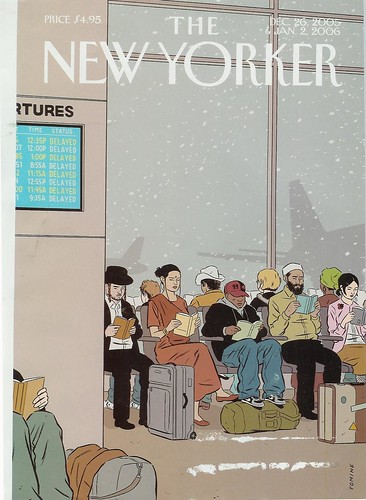
I'm always interested in the fiction published in The New Yorker. Although I generally don't buy the New Yorker. It's a weekly! I can't be expected to keep up that kind of reading pace. But, there are historically two New Yorker issues that I'll buy without provocation: the summer and winter fiction issues. Two over-sized issues devoted to fiction. Ahhhh.
So imagine me standing around the Barnes & Noble stacks last month in a fugue of holiday shopping overstimulation, staring at the spine of the late December New Yorker that reads World Changers. I didn't even thumb through it. I barely touched it. There must be some mistake. What happened to the winter fiction issue? Turns out it's economics: The summer fiction issue will remain, but the winter issue has been downsized. All is explained here and here.
Goodbye winter fiction issue. You were my winter friend, my electric blanket of contemporary prose under which I warmed my chilly muse (you can Tweet that!). Reading you was like driving my rusted-out 79' Prelude through the nice part of literary town. Sure, I'll buy the summer fiction issue, but I'll have to pace myself, keeping some stories for the long haul through the coming winter.
Note to the New Yorker: Why not continue the winter fiction issue online? This gives you virtually unlimited space to publish as many stories, articles, and cartoons on writing as you can find. Just a thought.
Tuesday, January 5, 2010
New Story in J Journal
To help me ring in the new year, on New Year's Eve two copies of the fall issue of J Journal arrived via the USPS. In it is my story, Younger Things. Arriving a couples weeks prior was an email from the editors of J Journal alerting me that they had nominated my story for a Pushcart Prize. Amazing. It's well into the first week of 2010 and I'm still pleasantly shocked that they chose Younger Things to help represent the journal for the Pushcart.
Each year editors of small presses can nominate up to six pieces of writing from their year's publications. Winners are published in the The Pushcart Prize: Best of the Small Presses, which features fiction, poetry, memoirs, and essays selected from hundreds of little magazines and small book publishers. I think this is one time when saying it's an honor just to be nominated is spot on. I know I'm in great company no matter what happens.
Younger Things is the story whose editing process I discussed on this blog late last summer (Publishing 101) when the J Journal editors made revision suggestions during the story's acceptance process. The experience of making these kinds of edits was a new one, but was well worth it, helping the story transform for the better and see publication.
Based out of CUNY’s John Jay College of Criminal Justice, J Journal is a specific breed of lit mag that offers new writing on justice, and "examines its subject through creative work, directly and tangentially." I'm not sure how my story, about a young man in love with a wild, at times dangerous older cancer patient, fits into this description. I'm just happy the editors found a place for my story in their journal. A special shout-out to my writing group from last year under whose eagle eye Younger Things first passed, and whose comments and suggestions helped shape the manuscript before I sent it out for publication.
Each year editors of small presses can nominate up to six pieces of writing from their year's publications. Winners are published in the The Pushcart Prize: Best of the Small Presses, which features fiction, poetry, memoirs, and essays selected from hundreds of little magazines and small book publishers. I think this is one time when saying it's an honor just to be nominated is spot on. I know I'm in great company no matter what happens.
Younger Things is the story whose editing process I discussed on this blog late last summer (Publishing 101) when the J Journal editors made revision suggestions during the story's acceptance process. The experience of making these kinds of edits was a new one, but was well worth it, helping the story transform for the better and see publication.
Based out of CUNY’s John Jay College of Criminal Justice, J Journal is a specific breed of lit mag that offers new writing on justice, and "examines its subject through creative work, directly and tangentially." I'm not sure how my story, about a young man in love with a wild, at times dangerous older cancer patient, fits into this description. I'm just happy the editors found a place for my story in their journal. A special shout-out to my writing group from last year under whose eagle eye Younger Things first passed, and whose comments and suggestions helped shape the manuscript before I sent it out for publication.
Sunday, November 29, 2009
Patience

Last week I was contacted by Fiction Magazine. They accepted a story of mine for publication. This is, of course, great news. Fiction magazine is carried by better independent bookstores, such as Brookline Booksmith, has been around since the early 70s, and backs up a wonderful history of supporting "new, emerging voices."
The story behind getting into Fiction is worth telling. I sent them my story almost three years ago, in February 2007. The story was fashioned from an outtake of a novel I was working on at the time. It was a stand-alone chapter that dealt with the second love experience of my teenage protagonist, and it didn't fit, so taking it out didn't upset any balance.
Separate from the framework of the novel, and after some revision, the piece stood on its own. Except for the ending. The original ending trails off. The stand-alone version couldn't trail off, it needed a concrete finish. This is the toughest part of shaping novel excerpts or outtakes; you must rework them so that they still make sense outside of the context of the novel. Because this was an outtake, I wasn't worried about maintaining the original spirit of the novel and could make it into what ever I wanted.
I reworked the ending to summarize the bittersweet end of a summer-long teenage relationship. I wasn't sure it worked, so I kept the ending brief; not overwriting, hoping not to call attention to any shortcomings. I sent the story out to Fiction. I must not have been confident with what I had written because I didn't send it elsewhere, and I never revised it.
When I opened and read the acceptance email, it took a couple minutes to realize what I was looking at. Most magazines/journals today will tell submitting writers that if they are not interested in your submission, you will not hear back. So it's heartening to know that us writers are not sending stuff out into an anonymous event horizon. That time waiting for a response isn't time wasted. And that if you sent a story out last year, the year before, or even the year before that, there's still hope. That somebody is spending late nights and weekends reading submissions from the slush pile in hopes of finding an unsung story, an unsung writer, another emerging voice.
Tuesday, November 17, 2009
Books in My Lobby 9

This week we have for you some Great American short stories. From Hawthorne to Hemingway. I didn't grab this one. But, what if I had? Then I'd be experiencing Amazon's mighty description firsthand:
"Beginning with well-known stories by Hawthorne, Melville, and Poe, this diverse and colorful collection includes tales by Mark Twain, Ambrose Bierce, Sherwood Anderson, Henry James, Edith Wharton, Willa Cather, Stephen Crane, and Mary Wilkins Freeman. From Sarah Orne Jewett’s portraits of rural Maine to F. Scott Fitzgerald’s brilliant tales from the Jazz Age, these stories span the breadth of the American experience."
Not that I don't love a good American story, but I already have a number of great anthologies that help scratch that story itch. Like The Best American Short Stories of the Century, edited by John Updike. And The Complete short Stories of Ernest Hemingway, The Finca Vigia Edition. The Best Short Stories of J.G. Ballard. The Collected Stories of Richard Yates. Great Esquire Fiction: The Finest Stories from the First Fifty Years. And representing the ladies: Like Life, Stories by Lorrie Moore. That should do me for awhile.
Tuesday, September 8, 2009
Publishing 101
For the past month I've been revising a short story based on feedback from the editor of a literary journal who has been dangling the carrot of publication. The first round of revision requests were an interesting batch of additions that had me looking at my story from a slightly new, or rather expanded, angle. One change was a simple search and replace. Elsewhere, I added needed shading to a couple scenes. One of the additions was too difficult to work in; there was so much going on in the story that another layer toppled it.
When I was done I felt the story benefited from the revision. They liked my additions but sent another round of requests. I was happy to make those first rounds of edits. This round seemed more subjective. They mentioned phrases and words that struck them as cliched or pedestrian. They also recommended the reorganization of certain sentences. Again, I took the suggestions and looked at my story from another new angle.
I reorganized the series of sentences as suggested, but I couldn't tell if it made that page better. I know it didn't make it worse. I took out the cliched idea of one of my characters'. Once out, I couldn't think of a replacement, so I reworded the preceding sentence. It changed the meaning a little, but I think the result in the reader's mind remains as intended. I made a few more clarifications, and that finished the second round.
The last time I had a story published, the editors told me they were making small edits and sent me the changes for my review. I couldn't tell what they had changed. The requested edits of my current story were unexpected but not surprising. The editors' reasoning behind them was so thoughtful that I was honored they had given my work such a close read and taken the time to try to make it better. I felt I was in good hands as I made the changes. I expect every journal editor has an idea of what works and what doesn't for his or her publication. Maybe the changes I made better reflect the attitude of the journal.
It's still my work, and I wouldn't have made the changes if I had felt strongly against them. My writing group read the same story earlier in the summer, and I incorporated many of their suggestions before sending it out. If I weren't open to others' ideas I wouldn't be in a writing group or participate in intense novel workshops where a thin critique skin leads to hard feelings and misunderstanding.
I'm excited to have another story published*, but don't feel I sold my soul to get it done. I told a writer friend about the edits, and he told me about an editor who once asked him to change the tense of one of his stories. Did that make it a better story? Who knows, but maybe it fit in more with how that editor wanted to present his publication. What are some of your experiences with journal editors? Were you ever asked to make a change that you didn't agree with? Did the changes make the story better?
*Pending final approval.
When I was done I felt the story benefited from the revision. They liked my additions but sent another round of requests. I was happy to make those first rounds of edits. This round seemed more subjective. They mentioned phrases and words that struck them as cliched or pedestrian. They also recommended the reorganization of certain sentences. Again, I took the suggestions and looked at my story from another new angle.
I reorganized the series of sentences as suggested, but I couldn't tell if it made that page better. I know it didn't make it worse. I took out the cliched idea of one of my characters'. Once out, I couldn't think of a replacement, so I reworded the preceding sentence. It changed the meaning a little, but I think the result in the reader's mind remains as intended. I made a few more clarifications, and that finished the second round.
The last time I had a story published, the editors told me they were making small edits and sent me the changes for my review. I couldn't tell what they had changed. The requested edits of my current story were unexpected but not surprising. The editors' reasoning behind them was so thoughtful that I was honored they had given my work such a close read and taken the time to try to make it better. I felt I was in good hands as I made the changes. I expect every journal editor has an idea of what works and what doesn't for his or her publication. Maybe the changes I made better reflect the attitude of the journal.
It's still my work, and I wouldn't have made the changes if I had felt strongly against them. My writing group read the same story earlier in the summer, and I incorporated many of their suggestions before sending it out. If I weren't open to others' ideas I wouldn't be in a writing group or participate in intense novel workshops where a thin critique skin leads to hard feelings and misunderstanding.
I'm excited to have another story published*, but don't feel I sold my soul to get it done. I told a writer friend about the edits, and he told me about an editor who once asked him to change the tense of one of his stories. Did that make it a better story? Who knows, but maybe it fit in more with how that editor wanted to present his publication. What are some of your experiences with journal editors? Were you ever asked to make a change that you didn't agree with? Did the changes make the story better?
*Pending final approval.
Thursday, February 5, 2009
First Draft Theater 2
First draft theater presents the second in a series of posts featuring a few pages of a first draft or a work in progress. (Check out the first here.) The following is the beginning of a story I've come back to a few times in the past year. Give it a read. Let me know what you think. Am I going to Hollywood? Or someplace even hotter? You decide.
Waiting for Hugo

Hugo aimed his manual camera out the drivers' side window of his 1986 Mustang. Though he had California plates, people always asked him where he was from. “Your car’s rusted,” they'd say. Cars don't rust in L.A. The Mustang was fine for just getting around but it was a lemon, in the shop every other month.
Hugo worked the lens and zoomed in for a close-up of the ranch house’s front windows. He tried to shoot fast but was dazzled by the bright orange curtains. He zoomed out and snapped a wide angle. The front of the house was overgrown with bushes and ivy. He had imagined a more streamlined environment, but he could work with it. He wondered if this was the Charles Manson house. He knew it was here in Laurel Canyon someplace, along a pleasant tree-lined street like this.
A woman came out of the house and walked down the driveway, watching him. She carried a tray.
Hugo hadn't planned on spying on this mid-century modern in the neighborhood where Manson did the deed. Lack of supplies had driven him out of his apartment; when he went to make coffee that morning he found his roommates had brewed the last of it. When he wasn't at his part-time temp job, he was home working on his screenplay. To write with any passion he needed coffee. With sugar if he could afford it. That meant a drive to Ralph's.
He had been ambitious when he left Kansas City and his tight-knit family and moved to Los Angeles. During his first year in L.A. he wrote a screenplay, a 150 page opus about a zoo of anthropomorphic animals that helps a lowly zoo employee outsmart the state lottery system. He was convinced it would get snapped up during an outrageously lucrative bidding war. Months were spent sending it to agencies and producers. He revised the script to make it a family-friendly PG-rated movie. When that didn’t work, it became an action movie, and finally he spun it as a hard-R suspense thriller. Nobody read it. When Hugo's passion for his sapient creatures dulled, he knew it was time to get busy on another screenplay.
At Ralph’s, Hugo walked the busy aisles, dropping essentials into his basket: a pound of Eight O’Clock coffee (cheap, but not the cheapest), a pound of sugar, wheat bread, baloney, macaroni loaf, Pepsi. At the checkout his card wasn’t accepted. Flushed, he had the girl put aside the sugar and the baloney then paid cash for the rest. Outside a man in a Nova with tinted windows tried to flag him over. "Hey buddy. You want a sandwich?" the man shouted to him. His face was beyond wrinkly, it was corrugated.
"I'm all set," Hugo said.
"Yeah? You look all set."
What did he need a sandwich for? Did he look like the kind of guy that would buy a sandwich out of a non-air conditioned car? Hugo drove onto Victory Blvd., realizing the sandwiches the guy was selling must have been drugs. He rolled down his windows. The dry air triggered his asthma and he started to cough but the wind cooled his hot skin. He hung a right, trying to remember all the drug dealer details so he could use him as a character in his script. His second screenplay. He got excited thinking about writing it and headed up into the hills of Laurel Canyon to carry out another errand.
His second screenplay concerned a tight-knit family living in a perfect Mid-Western suburb in the 1970's. The daughter gets pregnant and turns her middle-class family upside down. Hugo wanted pictures of a house to use as a model for the house his movie home. When he found the perfect house he would populate it with his characters like a life-sized dollhouse. Actual photos helped him visualize his family.
The woman walked into the road, ten feet from Hugo's Mustang. He slid his camera into his backpack. “It’s a public way,” Hugo said. “I’m not doing anything wrong.”
The woman smiled and held her tray in front of her. She was tall and gangly; at one time she had probably been thin. Her hands looked swollen. He couldn't stop looking at her clown-sized digits. He could use that detail. The boyfriend, a drug dealer, dropped the Baggie of dope because of his huge meaty hands. On the tray were white bread sandwiches.
“Monty’s home. If you’d like to talk to him,” the woman said, taking another step toward the car. “I’m sure he’d be interested in what you have to say. I'm Eve. Eve Garland?”
Hugo started the Mustang and was about to put it in gear when he realized the woman had not told him to leave.
"What?" he said out the window. Eve Garland. That struck something familiar in his memory. She was an old actress. She had been in some B-movies. Maybe some minor TV roles. He recognized her. Just.
She looked toward the house then back to Hugo. Her smile changed from greeting to imploring. It would have been creepy or pathetic but Hugo found it more ingratiating than anything.
"Monty’s been waiting."
"I think you have the wrong—"
“Sandwiches?”
She was like a mother, her voice a little loud but caring; the sandwiches were cut into quarters and stacked in a circle like a Wonder Bread pyramid or a wedding cake for six year olds. Hugo wanted to cover them with plastic wrap in case a bird crapped on them or the wind tussled with tree-stuff and something landed from above. Or pollen. Was there pollen in L.A.?
"Follow me?" The woman walked back up the driveway then turned, waiting.
Hugo was the pathetic one in this strange, sudden scenario. In the three years since he lived in the Valley nobody had ever waited for him. He couldn’t get his phone calls returned; he couldn’t get the lowest-tiered producer to even open the envelope in which he mailed his screenplay, afraid of unsolicited hit movie ideas for fear of getting sued. When Hugo did solicit, sending query letters as feelers, he got no action. He tried personalizing the queries depending on which production company he approached. (I’m a big fan of your client Bruce Spunkmeyer. I believe my script, a cross between Die Hard and Madagascar, would be a perfect fit for MadCap Productions.) If he got any response at all it was always no.
But Eve Garland was telling him that Monty wanted to see him. Was Monty her husband? Maybe he was a producer or worked at a studio. He pulled his car into the driveway, locked it up, then decided to grab his backpack. Maybe he could take more pictures of the house. He followed Eve onto a stone walkway.
It was midday. The neighborhood was still. The woman pulled a ring of keys from a lime-colored apron and opened the front door. She had a light touch with those thick fingers. “How rude of me.” She turned and blocked the door. “You must be peckish after your drive. Sandwich?”
Hugo grabbed four triangle sandwiches. Peanut butter and jelly. The quarter sandwiches created a whole one and he stood and ate. The sweet food was thrillingly familiar and set his stomach into a crescendo of gurgles.
“Thanks,” he managed.
"I'm so sorry I wasn't better prepared.”
Hugo followed her into a foyer that opened onto a wide sunken living room. The carpet was orange shag. The orange drapes, darker than the carpet, adorned all the windows. Sliding glass doors opened out onto a terrace and swimming pool. There was the hum of central air conditioning. It smelled musty but also like the scent of a flower Hugo couldn't place. But not an actual flower, but a powder derived from a flower. The furnishings looked ordered out of House Beautiful circa 1962. Nothing looked contemporary but was still pristine, as if the house had been kept in a hermetic time capsule.
That’s what he felt like he had walked into, a moment frozen in a different era; no questions asked, no reasons given. It was how he had originally hoped to be embraced by Hollywood’s decision makers and money providers. Hugo didn’t know what they expected of him. Would the real visitor drive up any minute? This could be an advantageous mistake. He needed contacts in the business; he had to make the most of it.
Waiting for Hugo

Hugo aimed his manual camera out the drivers' side window of his 1986 Mustang. Though he had California plates, people always asked him where he was from. “Your car’s rusted,” they'd say. Cars don't rust in L.A. The Mustang was fine for just getting around but it was a lemon, in the shop every other month.
Hugo worked the lens and zoomed in for a close-up of the ranch house’s front windows. He tried to shoot fast but was dazzled by the bright orange curtains. He zoomed out and snapped a wide angle. The front of the house was overgrown with bushes and ivy. He had imagined a more streamlined environment, but he could work with it. He wondered if this was the Charles Manson house. He knew it was here in Laurel Canyon someplace, along a pleasant tree-lined street like this.
A woman came out of the house and walked down the driveway, watching him. She carried a tray.
Hugo hadn't planned on spying on this mid-century modern in the neighborhood where Manson did the deed. Lack of supplies had driven him out of his apartment; when he went to make coffee that morning he found his roommates had brewed the last of it. When he wasn't at his part-time temp job, he was home working on his screenplay. To write with any passion he needed coffee. With sugar if he could afford it. That meant a drive to Ralph's.
He had been ambitious when he left Kansas City and his tight-knit family and moved to Los Angeles. During his first year in L.A. he wrote a screenplay, a 150 page opus about a zoo of anthropomorphic animals that helps a lowly zoo employee outsmart the state lottery system. He was convinced it would get snapped up during an outrageously lucrative bidding war. Months were spent sending it to agencies and producers. He revised the script to make it a family-friendly PG-rated movie. When that didn’t work, it became an action movie, and finally he spun it as a hard-R suspense thriller. Nobody read it. When Hugo's passion for his sapient creatures dulled, he knew it was time to get busy on another screenplay.
At Ralph’s, Hugo walked the busy aisles, dropping essentials into his basket: a pound of Eight O’Clock coffee (cheap, but not the cheapest), a pound of sugar, wheat bread, baloney, macaroni loaf, Pepsi. At the checkout his card wasn’t accepted. Flushed, he had the girl put aside the sugar and the baloney then paid cash for the rest. Outside a man in a Nova with tinted windows tried to flag him over. "Hey buddy. You want a sandwich?" the man shouted to him. His face was beyond wrinkly, it was corrugated.
"I'm all set," Hugo said.
"Yeah? You look all set."
What did he need a sandwich for? Did he look like the kind of guy that would buy a sandwich out of a non-air conditioned car? Hugo drove onto Victory Blvd., realizing the sandwiches the guy was selling must have been drugs. He rolled down his windows. The dry air triggered his asthma and he started to cough but the wind cooled his hot skin. He hung a right, trying to remember all the drug dealer details so he could use him as a character in his script. His second screenplay. He got excited thinking about writing it and headed up into the hills of Laurel Canyon to carry out another errand.
His second screenplay concerned a tight-knit family living in a perfect Mid-Western suburb in the 1970's. The daughter gets pregnant and turns her middle-class family upside down. Hugo wanted pictures of a house to use as a model for the house his movie home. When he found the perfect house he would populate it with his characters like a life-sized dollhouse. Actual photos helped him visualize his family.
The woman walked into the road, ten feet from Hugo's Mustang. He slid his camera into his backpack. “It’s a public way,” Hugo said. “I’m not doing anything wrong.”
The woman smiled and held her tray in front of her. She was tall and gangly; at one time she had probably been thin. Her hands looked swollen. He couldn't stop looking at her clown-sized digits. He could use that detail. The boyfriend, a drug dealer, dropped the Baggie of dope because of his huge meaty hands. On the tray were white bread sandwiches.
“Monty’s home. If you’d like to talk to him,” the woman said, taking another step toward the car. “I’m sure he’d be interested in what you have to say. I'm Eve. Eve Garland?”
Hugo started the Mustang and was about to put it in gear when he realized the woman had not told him to leave.
"What?" he said out the window. Eve Garland. That struck something familiar in his memory. She was an old actress. She had been in some B-movies. Maybe some minor TV roles. He recognized her. Just.
She looked toward the house then back to Hugo. Her smile changed from greeting to imploring. It would have been creepy or pathetic but Hugo found it more ingratiating than anything.
"Monty’s been waiting."
"I think you have the wrong—"
“Sandwiches?”
She was like a mother, her voice a little loud but caring; the sandwiches were cut into quarters and stacked in a circle like a Wonder Bread pyramid or a wedding cake for six year olds. Hugo wanted to cover them with plastic wrap in case a bird crapped on them or the wind tussled with tree-stuff and something landed from above. Or pollen. Was there pollen in L.A.?
"Follow me?" The woman walked back up the driveway then turned, waiting.
Hugo was the pathetic one in this strange, sudden scenario. In the three years since he lived in the Valley nobody had ever waited for him. He couldn’t get his phone calls returned; he couldn’t get the lowest-tiered producer to even open the envelope in which he mailed his screenplay, afraid of unsolicited hit movie ideas for fear of getting sued. When Hugo did solicit, sending query letters as feelers, he got no action. He tried personalizing the queries depending on which production company he approached. (I’m a big fan of your client Bruce Spunkmeyer. I believe my script, a cross between Die Hard and Madagascar, would be a perfect fit for MadCap Productions.) If he got any response at all it was always no.
But Eve Garland was telling him that Monty wanted to see him. Was Monty her husband? Maybe he was a producer or worked at a studio. He pulled his car into the driveway, locked it up, then decided to grab his backpack. Maybe he could take more pictures of the house. He followed Eve onto a stone walkway.
It was midday. The neighborhood was still. The woman pulled a ring of keys from a lime-colored apron and opened the front door. She had a light touch with those thick fingers. “How rude of me.” She turned and blocked the door. “You must be peckish after your drive. Sandwich?”
Hugo grabbed four triangle sandwiches. Peanut butter and jelly. The quarter sandwiches created a whole one and he stood and ate. The sweet food was thrillingly familiar and set his stomach into a crescendo of gurgles.
“Thanks,” he managed.
"I'm so sorry I wasn't better prepared.”
Hugo followed her into a foyer that opened onto a wide sunken living room. The carpet was orange shag. The orange drapes, darker than the carpet, adorned all the windows. Sliding glass doors opened out onto a terrace and swimming pool. There was the hum of central air conditioning. It smelled musty but also like the scent of a flower Hugo couldn't place. But not an actual flower, but a powder derived from a flower. The furnishings looked ordered out of House Beautiful circa 1962. Nothing looked contemporary but was still pristine, as if the house had been kept in a hermetic time capsule.
That’s what he felt like he had walked into, a moment frozen in a different era; no questions asked, no reasons given. It was how he had originally hoped to be embraced by Hollywood’s decision makers and money providers. Hugo didn’t know what they expected of him. Would the real visitor drive up any minute? This could be an advantageous mistake. He needed contacts in the business; he had to make the most of it.
Thursday, January 22, 2009
New Yorker Stories
I discovered a literary blog called The Millions the other day and found a great post from earlier this month. It’s a review of every story the The New Yorker published in 2008. Each story is synopsized briefly with a bit of the old thumbs up or down. Also, and this may be the best part, there are links to each story posted on the New Yorker website.
It’s interesting to see which authors showed up (lots of familiar names), and which ones had more than one story featured in that 12 month period. A few had more than one story, including T. Coraghessan Boyle, John Updike, Roddy Doyle, and Janet Frame. Alice Munro ended up with four. Neat trick. Good for her, but admittedly a little disheartening to see how the magazine keeps falling back to the same few dozen authors year after year. There are thousands of other writers of short fiction who would kill to have just one little story in the New Yorker. But hey, who am I to complain? I’m just happy any magazine, especially a weekly, especially one with such a pedigree, deems to continue featuring great literature on printed pages.
At the end of the article, the author gives his or her summation of the best stories of the year. I have to admit: I haven’t read many of these stories, but I will. After I get through the dozens of novels sitting in wait on my home shelving units.
It’s interesting to see which authors showed up (lots of familiar names), and which ones had more than one story featured in that 12 month period. A few had more than one story, including T. Coraghessan Boyle, John Updike, Roddy Doyle, and Janet Frame. Alice Munro ended up with four. Neat trick. Good for her, but admittedly a little disheartening to see how the magazine keeps falling back to the same few dozen authors year after year. There are thousands of other writers of short fiction who would kill to have just one little story in the New Yorker. But hey, who am I to complain? I’m just happy any magazine, especially a weekly, especially one with such a pedigree, deems to continue featuring great literature on printed pages.
At the end of the article, the author gives his or her summation of the best stories of the year. I have to admit: I haven’t read many of these stories, but I will. After I get through the dozens of novels sitting in wait on my home shelving units.
Sunday, October 19, 2008
First Draft Theater
First draft theater presents the first in a series of posts featuring a page or two of a first draft. The following is the first draft of what could be the beginning of a story, novel, or nothing depending on whether I continue with this idea. Give it a read. Let me know what you think. Is it worth continuing? What do you think's going to happen next?
And now...First Draft Theater
Reggie grabbed the snow shovel and pushed the handle into a mound of slushy, heavy snow. It was his job, one of many at the restaurant, to keep the front entrance clear. It was a slow night. Four parties since six. He wanted to make the task last.
He walked along the front of the building, out of the lights, scrapping the snow before him. He had smoked a joint a half hour ago. It was wrapping loosely around his limbs, dislocating his arms and legs. Giving him that dulling sensation that calmed him, softened his mind, allowed his thoughts to run along wire dangling in darkness between points of light.
The yellow t-shirt he wore said Fuller Liquors, faded. From a few years ago when his sister rang up customers and bagged there. Then she married her high school boyfriend and moved to Mashpee. Might as well have moved to Uranus for all the times he saw her anymore. If Mashpee was Uranus, Orleans was—whatever planet was beyond Uranus. Was there a planet farther out? Or was it further?
The reason he smoked tonight was Amber’s phone call. Jonathan had contacted her and wanted to meet with both of them tonight. Jonathan would pick up Amber at their apartment and then drive over and pick him up after his shift ended. When you called Jonathan, you left a voicemail that was never returned. When Jonathan called you, that meant something was starting up.
Reggie was halfway to the road before he realized he had left the restaurant’s portico behind him. He was shoveling the parking lot and he was almost positive his boss, Mr. Daniels, had told him not to do this. Plus he was getting wet. Wet snow. Snow always turned to rain on the Cape. And he was cold, freezing. When he was in high school—
“Reggie.” It was Mr. Daniels standing at the back door. “Reggie. Over here. Forget about the parking lot. Mike plows that. Just do back here.”
Reggie watched Mr. Daniels lift his arm. Like a zombie. The walking dead. Mr. Daniels—
“Reggie! Come over here.”
He trotted to the back door. Frozen snow caked the bottoms of his pant legs, clinging like loose teeth.
“Hi,” Reggie thought to say.
“Just make a path to the dumpster,” Mr. Daniels said, pointing across snow-covered pavement to the green dumpster back along the fence. In the summer that thing smelled horrible. One July night maggots formed all over and inside it. In minutes. Reggie couldn’t stop watching those things wriggle. An hour later they were gone. The mass of them living and dying in unison.
“And put a jacket on, it’s freezing out here. Did you hear me?”
“Sure. To the Dumpster.” Reggie had trouble paying attention sometimes.
And now...First Draft Theater
Reggie grabbed the snow shovel and pushed the handle into a mound of slushy, heavy snow. It was his job, one of many at the restaurant, to keep the front entrance clear. It was a slow night. Four parties since six. He wanted to make the task last.
He walked along the front of the building, out of the lights, scrapping the snow before him. He had smoked a joint a half hour ago. It was wrapping loosely around his limbs, dislocating his arms and legs. Giving him that dulling sensation that calmed him, softened his mind, allowed his thoughts to run along wire dangling in darkness between points of light.
The yellow t-shirt he wore said Fuller Liquors, faded. From a few years ago when his sister rang up customers and bagged there. Then she married her high school boyfriend and moved to Mashpee. Might as well have moved to Uranus for all the times he saw her anymore. If Mashpee was Uranus, Orleans was—whatever planet was beyond Uranus. Was there a planet farther out? Or was it further?
The reason he smoked tonight was Amber’s phone call. Jonathan had contacted her and wanted to meet with both of them tonight. Jonathan would pick up Amber at their apartment and then drive over and pick him up after his shift ended. When you called Jonathan, you left a voicemail that was never returned. When Jonathan called you, that meant something was starting up.
Reggie was halfway to the road before he realized he had left the restaurant’s portico behind him. He was shoveling the parking lot and he was almost positive his boss, Mr. Daniels, had told him not to do this. Plus he was getting wet. Wet snow. Snow always turned to rain on the Cape. And he was cold, freezing. When he was in high school—
“Reggie.” It was Mr. Daniels standing at the back door. “Reggie. Over here. Forget about the parking lot. Mike plows that. Just do back here.”
Reggie watched Mr. Daniels lift his arm. Like a zombie. The walking dead. Mr. Daniels—
“Reggie! Come over here.”
He trotted to the back door. Frozen snow caked the bottoms of his pant legs, clinging like loose teeth.
“Hi,” Reggie thought to say.
“Just make a path to the dumpster,” Mr. Daniels said, pointing across snow-covered pavement to the green dumpster back along the fence. In the summer that thing smelled horrible. One July night maggots formed all over and inside it. In minutes. Reggie couldn’t stop watching those things wriggle. An hour later they were gone. The mass of them living and dying in unison.
“And put a jacket on, it’s freezing out here. Did you hear me?”
“Sure. To the Dumpster.” Reggie had trouble paying attention sometimes.
Saturday, October 4, 2008
First Post -- Here we go
Just finished another great writing class with Ms. X, an instructor at Grub Street in Boston. It’s the fourth ‘session’ I’ve taken with her and her revolving stable of novelists, all of whom are at a similar level with their writing. Well, I only hope I’m at their level. Regardless, we are all working on novels in various stages of done-ness.
For the first three sessions, I workshopped my second novel, A Little Disappeared. It was 80%-85% finished when I bucked up and showed it to Ms. X and her class. (Now it's finished and I'm trying to land an agent.)
For the latest session, I brought in the first 120 pages of a new novel I started earlier this year. This new thing, well, it’s still damp. It was harrowing to show it to a roomful of great writers, baring myself writing-wise, letting it all flap in those chilly, atmospheric Grub Street hallways. After I finally let go my ego and squelched my stage fright and fear of rejection, the class critiqued it.
They gave it a decent scrubbing; unfolding it for structure problems, refolding to show character development flaws, mulling over the controversial subject matter, then spinning out idea after idea for the second draft. For a story that I was struggling to find (its way and footing long lost) it was an invaluable undertaking.
Now, post-class, I’m still writing the first draft. A test really, because most of this initial draft will be pruned or pulled up, then replanted and cultivated. But my characters, the current version of them, want to keep breathing, moving, fucking up, changing, and etc.'ing for a little longer.
After I'm done, do I put it in a drawer and let it smolder for a few months, douse it, read over the class’s comments, and start the next draft? Do I let it simmer longer and start a new novel? Do I focus on short stories and novel excerpts in an attempt to get short pieces published and my name out there more?
Stick around. I'll let you know how it all goes down.
Define the Phrase
Hog Grubber.
I’ll give the answer in my next post.
(From the 1811 Dictionary of the Vulgar Tongue.)
Current Listening
Bethany Curve, Biff Bang Pow, Big Black, Big Country (one after the next in my iTunes).
For the first three sessions, I workshopped my second novel, A Little Disappeared. It was 80%-85% finished when I bucked up and showed it to Ms. X and her class. (Now it's finished and I'm trying to land an agent.)
For the latest session, I brought in the first 120 pages of a new novel I started earlier this year. This new thing, well, it’s still damp. It was harrowing to show it to a roomful of great writers, baring myself writing-wise, letting it all flap in those chilly, atmospheric Grub Street hallways. After I finally let go my ego and squelched my stage fright and fear of rejection, the class critiqued it.
They gave it a decent scrubbing; unfolding it for structure problems, refolding to show character development flaws, mulling over the controversial subject matter, then spinning out idea after idea for the second draft. For a story that I was struggling to find (its way and footing long lost) it was an invaluable undertaking.
Now, post-class, I’m still writing the first draft. A test really, because most of this initial draft will be pruned or pulled up, then replanted and cultivated. But my characters, the current version of them, want to keep breathing, moving, fucking up, changing, and etc.'ing for a little longer.
After I'm done, do I put it in a drawer and let it smolder for a few months, douse it, read over the class’s comments, and start the next draft? Do I let it simmer longer and start a new novel? Do I focus on short stories and novel excerpts in an attempt to get short pieces published and my name out there more?
Stick around. I'll let you know how it all goes down.
Define the Phrase
Hog Grubber.
I’ll give the answer in my next post.
(From the 1811 Dictionary of the Vulgar Tongue.)
Current Listening
Bethany Curve, Biff Bang Pow, Big Black, Big Country (one after the next in my iTunes).
Subscribe to:
Posts (Atom)